Even the most advanced, laboratory-calibrated air quality monitor is strictly limited by the air it can physically ingest. If a monitor is placed in a stagnant corner or directly in the path of fresh air supply, its readings will fail to represent the overall environmental reality of the space. Strategic placement is paramount.
The Breathing Zone
The primary rule of air quality monitoring is to measure the air you are actually breathing. This vertical band of space is known as the "Breathing Zone."
Monitors should generally be placed between 3 to 6 feet (1 to 1.8 meters) off the floor. Placing a monitor on the ground exposes it to settling dust and heavy gases, artificially inflating particulate readings. Placing it too close to the ceiling subjects it to stratified hot air and trapped rising gases, which also distorts the overall environmental average.
Locations to Avoid
To prevent localized micro-climates from distorting your data, avoid placing the monitor in the following areas:
- Near HVAC Vents or Drafty Windows: If the monitor is in the direct path of an air supply register, it will read the quality of the freshly conditioned air entering the room, not the accumulated air the occupants are breathing.
- Direct Sunlight: Thermal load from the sun will wildly distort internal temperature sensors. Furthermore, heat can temporarily alter the sensitivity of MOx (VOC) sensors, causing false spikes or dips.
- Next to Humidifiers: As previously noted, ultrasonic humidifiers eject microscopic water droplets. Laser-based PM sensors cannot distinguish between water vapor and solid smoke particles. Proximity to a humidifier will result in off-the-charts PM2.5 readings.
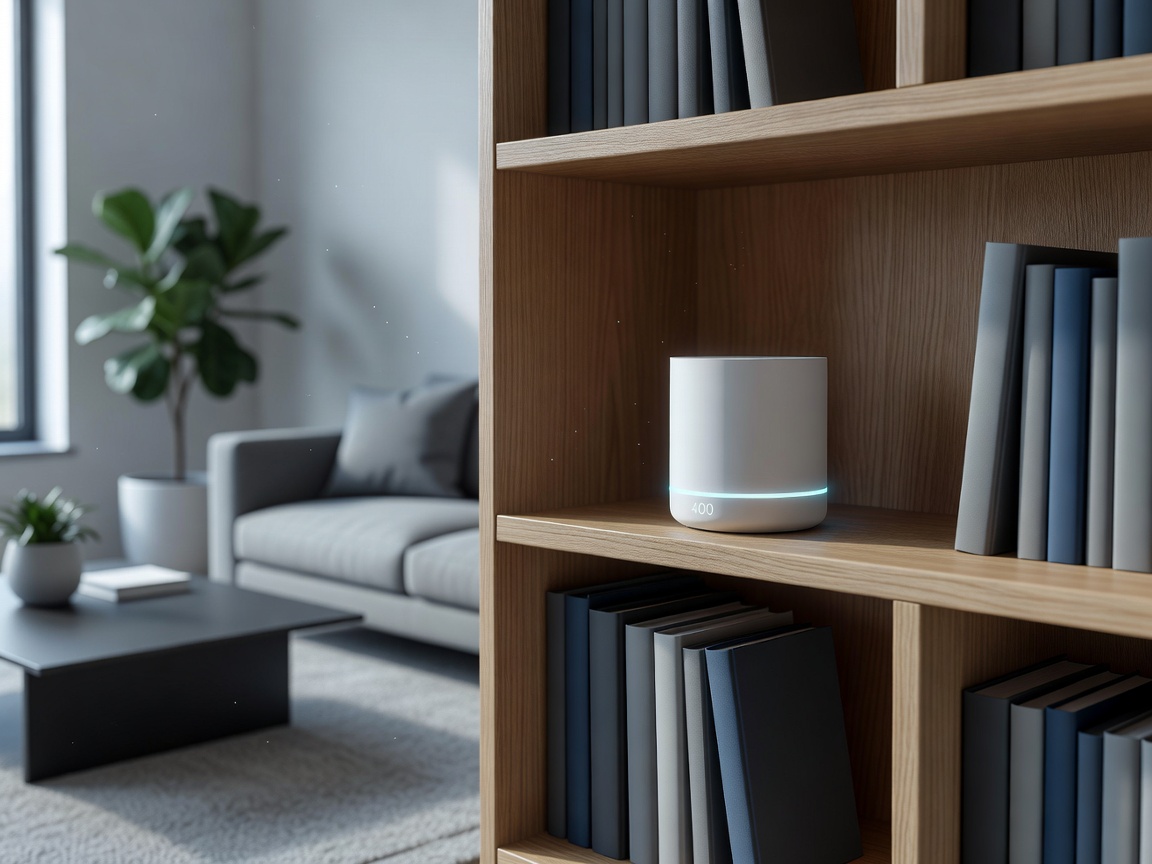
- Dead Corners: Placing a device deep on a bookshelf, tightly squeezed between objects, or in corners where air circulation stagnates will result in delayed response times to actual room changes.
| Room Type | Recommended Placement | Rationale |
|---|---|---|
| Bedroom | On a nightstand or dresser, away from the door. | Monitors overnight CO2 build-up near the occupant's sleeping location. |
| Kitchen | Open counter, 10+ feet from the stove. | Captures ambient cooking particulates without being blinded by direct smoke/steam. |
| Home Office | On the desk, slightly offset from direct breath. | Tracks CO2 closely to monitor cognitive fatigue during work hours. |
Single Node vs. Multi-Node Deployment
A frequent error is assuming a single monitor in the living room represents the entire house. Due to internal architecture, closed doors, and varying HVAC pressure zones, different rooms operate as entirely distinct ecosystems. The air quality in an open-concept kitchen will rarely reflect the CO2 accumulation in a closed bedroom down the hall.
For comprehensive tracking, prioritize locations based on occupancy duration. The primary bedroom is the most critical monitoring location, as occupants spend 7 to 9 continuous hours there. The secondary priority should be the main living space or home office.