Unlike simple thermal thermometers, air quality monitors rely on complex optical and chemical interactions to function. Because they actively pull ambient air—and all the physical debris contained within it—into their housing, they are subject to physical fouling and electronic drift over time.
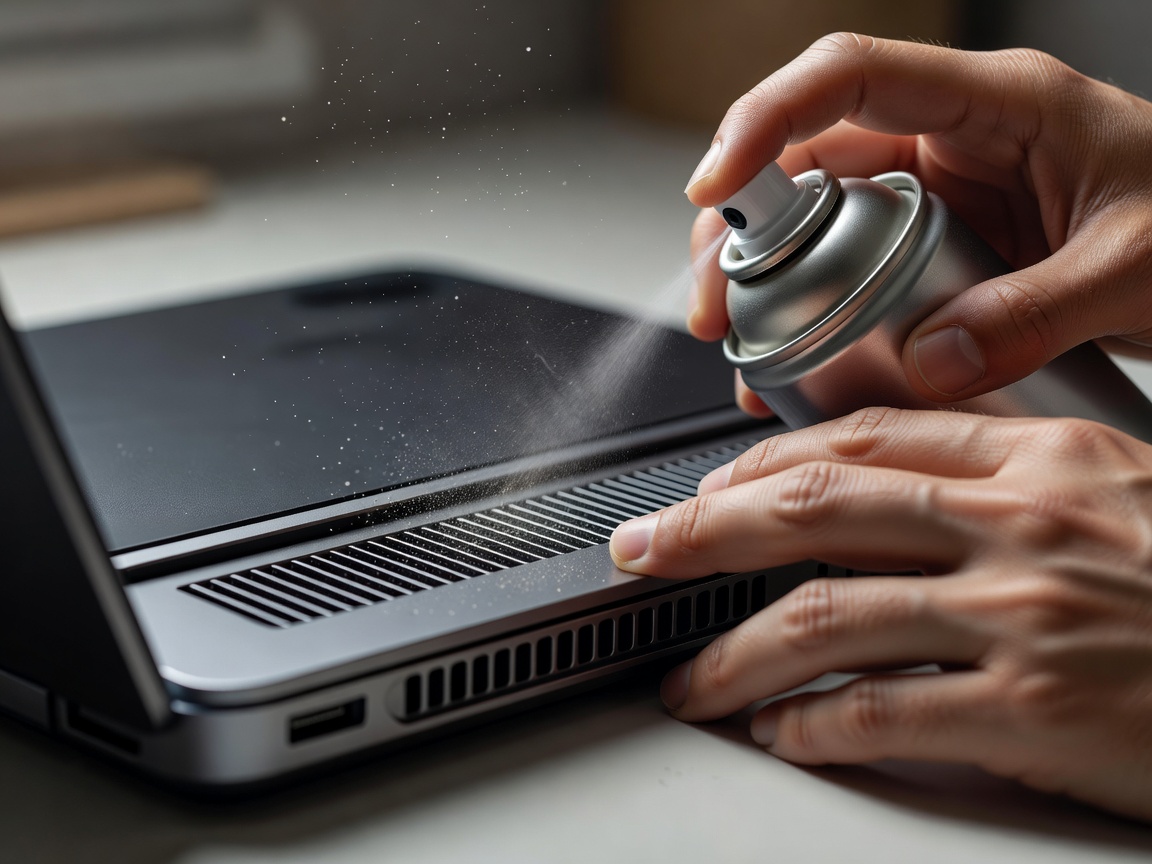
Cleaning Intake Vents
The most common cause of artificially high PM2.5 readings is dust accumulation within the laser scattering chamber. Particulate sensors use a micro-fan to draw air inside. Over months of operation, household dust, pet dander, and lint build up around the fan blades and the optical lens.
A standard bi-annual maintenance routine should include:
- Powering down the device completely.
- Locating the intake and exhaust grilles on the housing.
- Using a can of compressed air, holding it at least 6 inches away, and pulsing brief bursts of air into the vents to dislodge accumulated dust.
- Never using liquid solvents or inserting physical brushes into the sensor chamber, as this can easily scratch the delicate optical lenses.
Understanding Calibration Drift
Chemical sensors naturally drift over time as their components age. If left unchecked, a CO2 sensor might drift upwards, reporting 600 ppm in an empty room that actually contains 400 ppm. To combat this, quality devices utilize Automatic Background Calibration (ABC).
The ABC algorithm assumes that at some point during a standard 7-to-14-day window, the building will be unoccupied, and the internal CO2 level will drop to match the outdoor atmospheric baseline (approximately 400-420 ppm). The sensor records the lowest trough during this period and continuously recalibrates its "zero" point to match that floor.
| Component | Failure Mode | Mitigation Strategy |
|---|---|---|
| PM2.5 Laser Lens | Dust accumulation leading to false highs | Gently blow out housing with compressed air every 6 months. |
| NDIR CO2 Sensor | Upward baseline drift due to lack of fresh air | Expose device to fresh outdoor air for 30 minutes weekly. |
| MOx VOC Sensor | Chemical saturation / poisoning | Avoid exposing device directly to high-concentration silicones or hairsprays. |
Manual Forced Calibration
If a device is placed in a space that never fully empties—such as a continuously occupied bedroom, a basement without ventilation, or a commercial greenhouse—the Automatic Background Calibration algorithm will fail, as it will never see the 400 ppm baseline. Over time, it will assume the lowest reading it sees (e.g., 800 ppm) is the new outdoor baseline, throwing off all subsequent measurements.
If you suspect severe drift, most premium devices offer a manual calibration routine. This involves taking the monitor outdoors into clean, fresh air, powering it on, and triggering a forced calibration sequence through its software interface. The device will run for 10-20 minutes, locking its new baseline to the actual outdoor atmosphere.